
China Services PMI slows as domestic demand offsets weak external conditions
News brief
The report reinforces a key divergence in the global macro picture; China is experiencing slower growth but with relatively subdued inflation pressures, in contrast to energy-driven cost shocks seen elsewhere. The ability of firms to cut prices highlights weak pricing power and supports the case for continued policy accommodation. For markets, this leans toward a softer inflation impulse…
Why traders care
For traders, the practical value is less about the headline alone and more about how it changes context, sentiment and the quality of the next decision.
What to watch next
- Watch follow-through, not just the first reaction: liquidity, volatility and confirmation across related assets usually tell the real story.
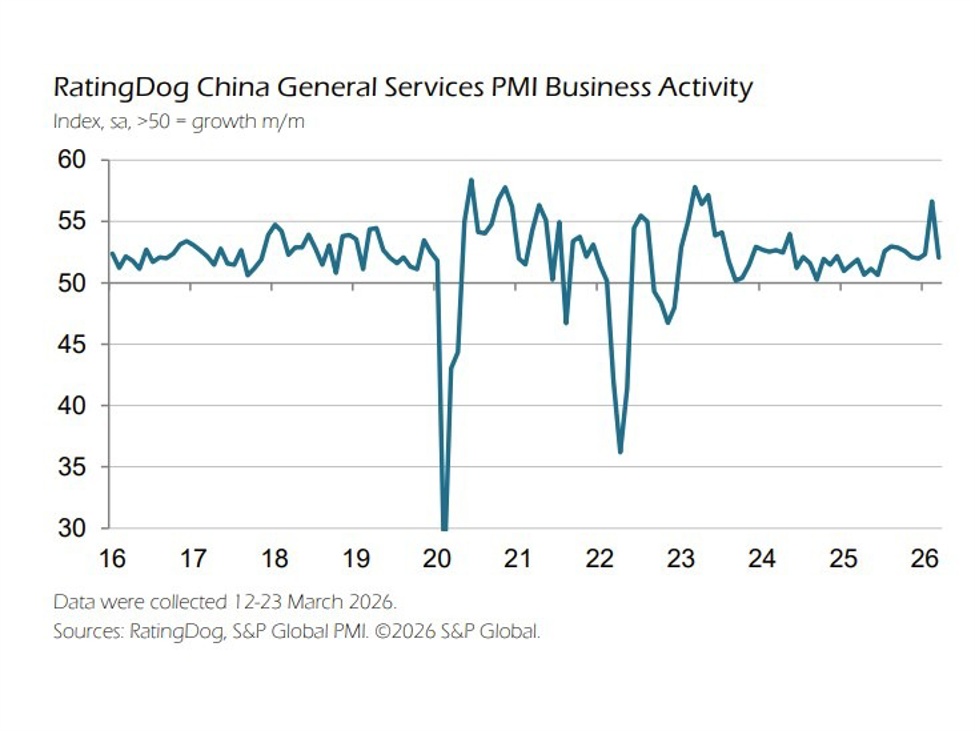
The report reinforces a key divergence in the global macro picture; China is experiencing slower growth but with relatively subdued inflation pressures, in contrast to energy-driven cost shocks seen elsewhere. The ability of firms to cut prices highlights weak pricing power and supports the case for continued policy accommodation. For markets, this leans toward a softer inflation impulse… China’s services sector remains in expansion but is slowing, with domestic demand supporting growth while weak exports, falling employment and price discounting point to softer underlying momentum. China’s services sector remains in expansion but is slowing, with domestic demand supporting growth while weak exports, falling employment and price discounting point to softer underlying momentum. Summary: China Services PMI eases to 52.1 (prev 56.7), still expansionary Growth slows sharply from February’s 33-month high Domestic demand remains the key driver of activity New export orders slip back into contraction Employment falls for a second straight month Cost pressures remain… For traders, the practical value is less about the headline alone and more about how it changes context, sentiment and the quality of the next decision. Watch follow-through, not just the first reaction: liquidity, volatility and confirmation across related assets usually tell the real story.